 Support US
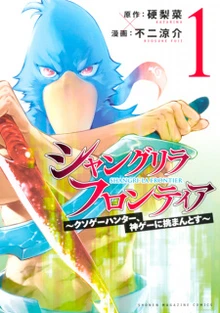
Read Shangri-La Frontier Manga Online
Shangri-La Frontier, Shangri-La Frontier ~Kusoge Hunter, Kamige ni Idoman to su~, シャングリラ・フロンティア, シャングリラ・フロンティア ~クソゲーハンター、神ゲーに挑まんとす~, シャンフロ, 香格裡拉·弗隴提亞~屎作獵人向神作發起挑戰~
Synposis:
Second year high school student Rakurou Hizutome is interested in one thing only: finding "shitty games" and beating the crap out of them. His gaming skills are second to none, and no game is too bad for him to enjoy. So when he's introduced to the new VR game Shangri-La Frontier, he does what he does best—min-maxes and skips the prologue to jump straight into the action. But can even an expert gamer like Rakurou discover all the secrets that Shangri-La Frontier hides...?
Type: Manga
Status: ongoing
Author(s): KATA Rina
Artist(s): FUJI Ryosuke
Released: 2020
Shangri-La Frontier Chapters
Shangri-La Frontier: Kusoge Hunter, Kamige ni Idoman to su
Native Title: シャングリラ・フロンティア ~クソゲーハンター、神ゲーに挑まんとす~ Author: Katarina | Illustrator: Ryosuke Fuji Original Publisher: Kodansha (Weekly Shōnen Magazine) Animation Studio: C2C Genre Positioning: VRMMO, Action-Adventure, LitRPG, Comedy, Fantasy
At its core, Shangri-La Frontier is a masterclass in modern VRMMO storytelling that strips away the exhausted “trapped in a game” isekai tropes in favor of pure, unadulterated gaming joy. Originally penned by Katarina as a wildly popular web novel on Shōsetsuka ni Narō before receiving a kinetic, high-octane manga adaptation by Ryosuke Fuji, the series follows Rakuro Hizutome. Rakuro is a “kusoge” (trash game) aficionado who thrives on breaking buggy, unbalanced, and poorly designed games.
When he finally decides to tackle a “god-tier” game—the titular VRMMO Shangri-La Frontier boasting 30 million players—he brings his broken-game survival instincts, min-maxing habits, and unparalleled parrying skills into a perfectly polished fantasy world. The narrative evolves rapidly from a comedic exploration of a gamer’s quirks into an epic saga of world-first achievements, hidden lore, and colossal boss raids. What sets Shangri-La Frontier apart is its profound respect for gaming culture; it feels like an authentic MMO experience translated flawlessly into a high-stakes manga narrative.
Latest Shangri-La Frontier Updates & Serialization Status
Shangri-La Frontier maintains a robust and consistent weekly serialization in Kodansha’s Weekly Shōnen Magazine. The manga has amassed over 20 tankōbon volumes and shows no signs of slowing down, consistently ranking among Kodansha’s top-performing digital and physical properties.
Beyond the page, the franchise has successfully transitioned into a multimedia juggernaut. The anime adaptation by Studio C2C captured global attention with its stellar animation and dynamic fight choreography, securing a consecutive multi-cour second season that continues to drive manga sales. Additionally, the franchise has expanded into the gaming sphere with announced video game tie-ins and promotional crossovers, cementing its status as a pillar of modern action anime and manga.
Story Overview & Core Narrative Arcs
The plot foundation is built on Rakuro’s in-game avatar, Sunraku, as he inadvertently stumbles into the game’s deepest secrets. By applying his unorthodox playstyle—running around half-naked with a bird mask to maximize weight/speed ratios—Sunraku encounters a Unique Monster, Lycaon the Nightslayer, far earlier than the developers intended. Surviving the encounter earns him a unique curse and unlocks an exclusive scenario involving the Vorpal Bunnies, catapulting this solo player into the center of the game’s evolving global narrative.
Core Narrative Pillars:
-
The Unique Scenarios: Hidden quests that permanently alter the game world for all 30 million players, driven by Sunraku’s chaotic progression.
-
The Seven Supreme Colossi: The ultimate raid bosses (Unique Monsters) that serve as the narrative milestones, requiring unprecedented player coordination and skill to defeat.
-
Trash-Game Logic in a God Game: Sunraku constantly applies glitch-hunting reflexes, frame-perfect parries, and unorthodox aggro management to overcome mathematically impossible odds.
-
Guild Politics & Information Warfare: The intense rivalry between top-tier clans (like Wolfgang and Ashura Kai) to monopolize information, unique NPCs, and world-first clears.
-
The Divine Age Mystery: The underlying lore of the game’s extinct ancient civilization, driving the ultimate endgame objective of the SLF universe.
Main Characters in Shangri-La Frontier
The Protagonist: Sunraku (Rakuro Hizutome) An eccentric gamer who finds joy in the suffering of poorly programmed games. In Shangri-La Frontier, Sunraku operates as a mercenary-style dual-wielding evasion tank. He relies entirely on frame-perfect dodges and critical strikes because his cursed status prevents him from equipping armor on his torso and legs. His internal motivation isn’t to save the world, but to satiate his gamer curiosity, conquer the ultimate challenges, and drag his friends into the chaos.
The Antagonistic Forces: The Unique Monsters & PK Clans Rather than a traditional villain, the primary antagonists are the game’s structural challenges—chiefly the Seven Supreme Colossi, such as Wezaemon the Tombguard and Lycaon the Nightslayer. These raid bosses possess insurmountable stats and phase-based mechanics that require perfection to beat. Secondarily, Sunraku faces antagonistic player factions, specifically Player Killer (PK) guilds and rival top-tier clans who view his monopolization of Unique Scenarios as a threat to their own progression.
The Mentors & Anchors: Arthur Pencilgon and Emul Towa Amane, playing as the manipulative and brilliant Arthur Pencilgon, is Sunraku’s long-time trash-game rival and SLF mastermind. She orchestrates the massive, multi-clan raids necessary to take down the Colossi, serving as the tactical anchor to Sunraku’s chaotic frontline action. Meanwhile, Emul, an advanced AI Vorpal Bunny NPC, acts as Sunraku’s magical support, lore guide, and comedic foil, bridging the gap between standard gameplay and the hidden Unique Scenarios.
Lore, Power Systems, and World Mechanics
Power Engine / SystemShangri-La Frontier utilizes a hard LitRPG framework based on stats, skill synergies, and equipment durability. Abilities are unlocked through repetitive action, leveling up, or specific achievements. The combat heavily emphasizes player skill over raw numerical superiority; a high-level attack can be negated by a perfectly timed low-level parry. Magic and physical skills can be chained together, but players must manage stamina and mana gauges, preventing mindless button-mashing.
World Hierarchy
-
Standard Mobs & Area Bosses: The baseline progression hurdles for the average player.
-
Unique Scenarios & EX Quests: Hidden, world-altering questlines accessible only by meeting hyper-specific, often counter-intuitive conditions.
-
The Seven Supreme Colossi (Unique Monsters): Apex entities that roam the world or occupy specific domains. Defeating them triggers global announcements and advances the game’s overarching “World Story.”
-
Advanced AI NPCs: Beings like Vash and Emul who possess true sentience, capable of dynamic emotional responses, permadeath, and shaping the world’s economy and politics.
Deep Mythos The universe of SLF is built upon the ruins of the “Divine Age,” a hyper-advanced civilization that fell to a catastrophic event. The monsters, magic, and very existence of the Seven Colossi are tied to this ancient technology and the legacy of its creators (such as Alice and the Bahamut systems). Unraveling what happened to the Divine Age is the true endgame of Shangri-La Frontier.
Narrative Framework & Progression Appeal
The narrative momentum of the series is driven by the sheer unpredictability of player agency. Readers are kept invested not through manufactured “life or death” stakes—dying just means respawning with a stat penalty—but through the psychological tension of high-stakes gaming. Dropping rare loot, losing world-first progression, or failing a one-time Unique Scenario carries massive weight.
What Makes the Narrative Satisfying:
-
Merit-Based Progression: Sunraku earns his victories through visible mechanical mastery, trial-and-error, and tactical planning, never through unearned “cheat” abilities.
-
The Thrill of the Unknown: The joy of discovery as Sunraku uncovers lore that the rest of the player base didn’t even know existed.
-
Pacing Dynamics: Seamless transitions between intense, multi-chapter boss raids and hilarious, low-stakes side quests in other “trash games.”
-
Consequence-Heavy Actions: Choices matter. Triggering a boss phase early or failing to protect an NPC has permanent ramifications for the server.
-
Camaraderie and Rivalry: The authentic banter and shifting alliances between high-tier gamers trying to outplay each other.
Franchise Identity & Production Quality
Ryosuke Fuji’s artwork elevates the original web novel into a visual spectacle. The manga is characterized by kinetic, double-page spreads that convey dizzying speed and brutal impacts. The paneling deliberately mimics the spatial awareness of a high-level gamer, often incorporating MMO UI elements like health bars, cooldown timers, and damage numbers organically into the art.
Key Production & Thematic Elements:
-
Dynamic Avatar Designs: Distinct, highly detailed character designs that reflect players’ personalities and specialized builds.
-
Monster Scaling: A profound sense of scale, making human avatars look terrifyingly small against Colossi like Wezaemon.
-
Visual Comedy: Exaggerated facial expressions and SD (super-deformed) art during comedic trash-game intermissions.
-
Clean Action Geography: Readers can always track where characters are and what abilities they are using, crucial for raid-boss choreography.
-
Continuity of Damage: Armor breaks, weapons chip, and environmental destruction persists throughout long battles.
Setting & Societal Impact
The real world in Shangri-La Frontier is a near-future society where full-dive VR is ubiquitous. Display screens have been replaced by retinal projections, and the gaming industry dictates massive cultural and economic trends.
Elements Shaping the Setting:
-
The Pro-Gaming Economy: High-level clans operate like esports organizations, complete with sponsors, NDAs, and corporate espionage.
-
The Kusoge Subculture: A thriving underground community of gamers who masochistically play broken games, operating on obscure internet forums.
-
AI Rights and Sentience: The game’s NPCs are so advanced they pass the Turing test, raising questions about how players treat digital life.
-
Developer vs. Player Meta: The ongoing invisible war between the game developers (who try to balance the game) and players (who try to break it).
-
Civilian Escapism: How ordinary people use SLF as a second life, contrasting with the hardcore players who treat it as a battleground.
Why Shangri-La Frontier Is So Popular
-
No Isekai Baggage: It focuses on the pure, unadulterated fun of gaming without forcing real-world death or “trapped” melodrama.
-
Relatable Gamer Culture: Perfectly captures MMO tropes like min-maxing, fashion-souls, toxicity, speedrunning, and forum theorizing.
-
God-Tier Animation: Studio C2C’s adaptation went viral for its cinematic, sakuga-heavy boss fights, drawing massive attention to the manga.
-
Charismatic Protagonist: Sunraku is highly competent but wildly unhinged, making him incredibly entertaining to follow.
-
Rewarding Lore: The world-building is intricate and pieced together organically through item descriptions and environmental storytelling.
-
Stakes Without Death: Proving that losing a rare item or a world-first clear can generate just as much tension as a literal threat to a character’s life.
Where to Read Shangri-La Frontier Manga Officially
For English readers, Shangri-La Frontier is officially licensed by Kodansha.
-
Digital Serialization: You can read the latest chapters via simulpub on the K Manga app and website (available in supported regions).
-
Physical Volumes: English physical tankōbon volumes are published and distributed globally by Kodansha Comics, available at major bookstores like Barnes & Noble, Amazon, and Right Stuf/Crunchyroll Store.
Final Thoughts
Shangri-La Frontier stands as a monumental achievement in the LitRPG and VRMMO genres. By completely discarding the need for artificial life-or-death stakes, it proves that the passion, frustration, and triumph of video games are compelling enough to carry a long-form narrative. It captures the zeitgeist of modern gaming culture, translating the euphoria of clearing a brutally difficult raid boss into an exhilarating reading experience.
As the serialization trajectory continues, the series is uniquely positioned to remain a dominant force in the manga landscape. With the expansive world of the Seven Colossi yet to be fully explored and a multimedia franchise actively propelling its popularity, Shangri-La Frontier is not just a love letter to gamers—it is the gold standard for how to write virtual worlds in modern fiction.